AMR Explained is our weekly series on the infections that are becoming harder to treat. One germ, one short video, every Sunday.
What is drug-resistant TB?
Tuberculosis is curable. It's treated with a combination of medicines taken every day for four to six months. When treatment stops too early, the toughest bacteria survive and multiply, and the medicines stop working against them. That is how multidrug-resistant TB (MDR-TB) begins: TB that no longer responds to rifampicin and isoniazid, two of the main TB medicines.
How big is the problem?
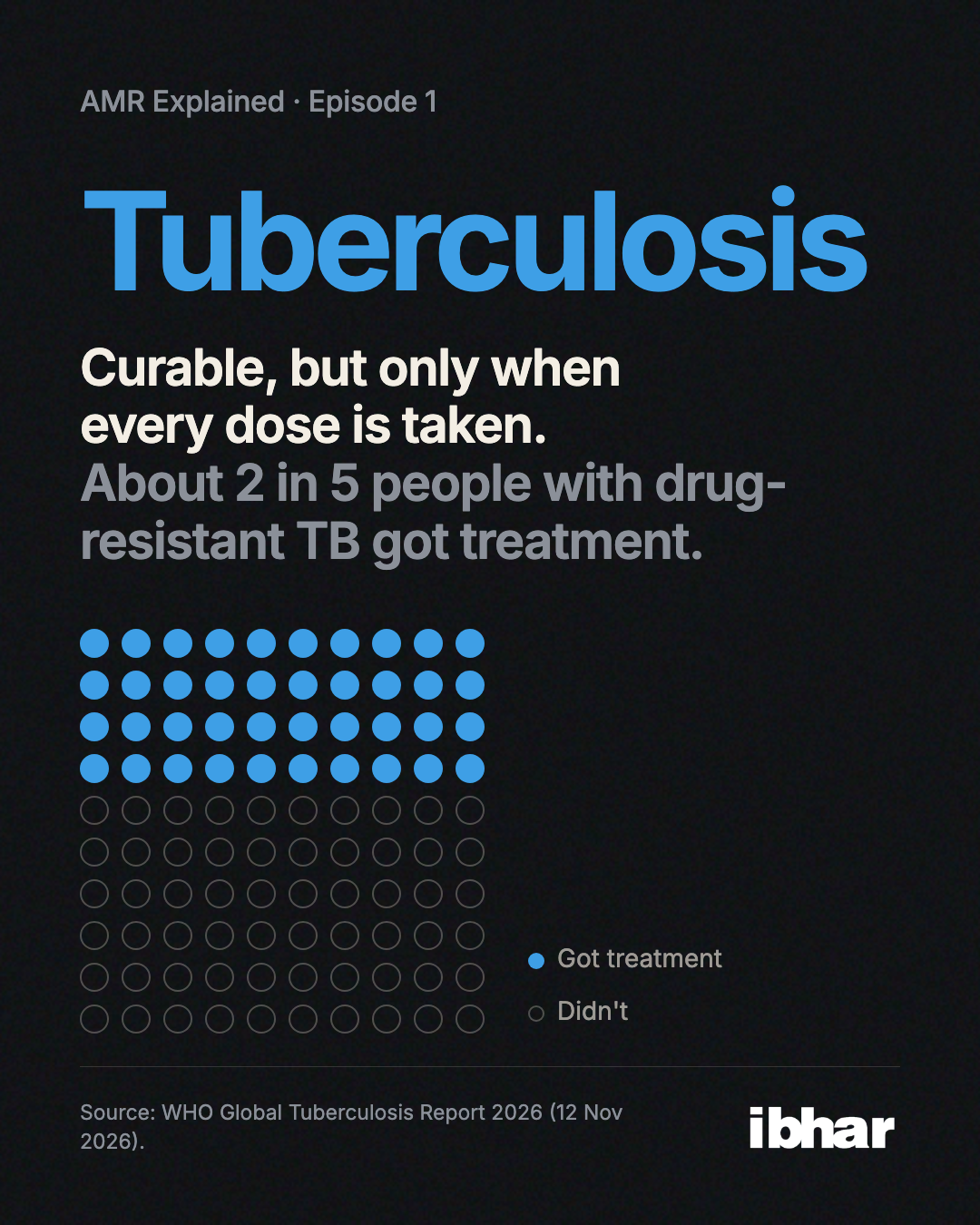
According to WHO's Global Tuberculosis Report 2026, an estimated 10.6 million people fell ill with TB in 2025 and 1.13 million died. Only about 2 in 5 people with multidrug-resistant TB got treatment.
Is there good news?
Yes. Drug-resistant TB can still be cured, and newer six-month, all-oral regimens are making treatment shorter and easier to complete.
What can you do?
If a cough lasts for weeks, get tested. If you're being treated for TB, take every dose until your doctor says the course is complete.
Transcript
A cough that lasts for weeks. Easy to ignore. But it can be tuberculosis. TB spreads through the air, when people with TB cough, sneeze or spit. It's curable. But only if the medicines are taken every day, for four to six months. Stop too early, and the toughest bacteria survive. They multiply, and the medicines stop working. That's multidrug-resistant TB. It no longer responds to rifampicin and isoniazid, two of the main TB medicines. In 2025, an estimated 10.6 million people fell ill with TB. 1.13 million died. And only about two in five people with multidrug-resistant TB got treatment. The good news? Drug-resistant TB can still be cured, and newer six-month regimens are making treatment shorter. So if a cough lasts for weeks, get tested. And if you're treated, take every dose. At Ibhar, we help hospitals track infections and antibiotic use, to catch resistance early. And we are determined to fight antimicrobial resistance, so our medicines keep working.
Why this matters to us
We work with hospitals on antibiotic use and resistance surveillance, so we see how resistance builds up long before it makes the news. Next Sunday's episode is about typhoid.
Sources
- World Health Organization. Global Tuberculosis Report 2026, 12 November 2026.
- World Health Organization. Tuberculosis fact sheet, 12 November 2026.
Music: "Aphelion" by Scott Buckley, released under CC-BY 4.0. www.scottbuckley.com.au