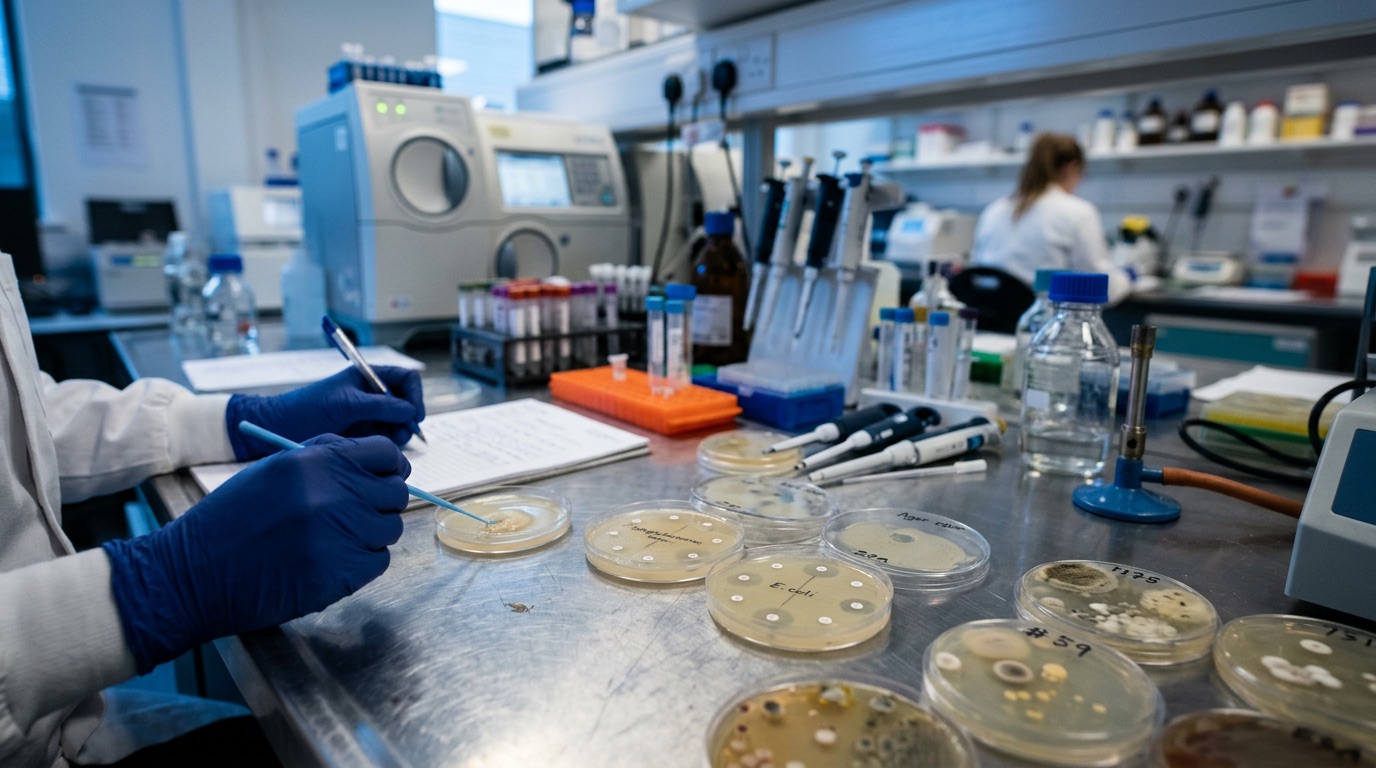
The microbiology laboratory produces some of the most clinically valuable data in any hospital. Every culture and antimicrobial susceptibility test (AST) tells you which organism is causing an infection and which drugs will work. Across thousands of isolates, they also show how resistance is evolving inside your own walls.
Too often, though, that value is lost in transit. Reports are printed or sit in a laboratory information system (LIS) the treating team rarely checks. Resistance alerts arrive by phone, if at all. The cumulative antibiogram is compiled once a year in a spreadsheet, and by then it is already out of date.
Why it matters now
Antimicrobial resistance (AMR) was directly responsible for an estimated 1.27 million deaths globally in 2019 (GRAM Collaborators, The Lancet, 2022). In India, the ICMR Antimicrobial Resistance Research & Surveillance Network (AMRSN) 2024 annual report, based on tertiary-care data, continues to report high carbapenem resistance in key Gram-negative pathogens such as Klebsiella pneumoniae and Acinetobacter baumannii. A 2024 study in The Lancet Regional Health – Southeast Asia observed rising carbapenem resistance in Klebsiella bloodstream infections, with resistance in hospital-acquired infections preceding that in community-acquired ones.
When the margin for error in empirical therapy is this thin, the speed and clarity of microbiology data become patient-safety issues.
Four steps from report to intelligence
1. Structure the result
A culture result should be structured data, not a PDF. That means the organism, specimen, site, MIC values and interpretation (S/I/R, or SDD where applicable), each linked to a patient, an encounter and a ward. Structured results can be interpreted, alerted on and aggregated. Free text cannot.
2. Interpret consistently
Breakpoints change. Labs following CLSI (M100) or EUCAST need interpretations applied consistently and updated when the standard changes. Resistance phenotypes such as MDR, XDR and PDR should be flagged automatically using agreed definitions, so that a carbapenem-resistant isolate is recognised immediately, not when someone reads the full report.
3. Deliver it to the decision-maker
The most important reader of a positive blood culture is the clinician choosing the next dose. Results should reach them, and the duty infection control nurse for alert organisms, through channels they actually use, with a clear and concise summary. A MIC-guided table or therapeutic index (comparing the measured MIC to the breakpoint) helps clinicians see not just whether a drug is active but how much margin it has.
4. Aggregate into a living antibiogram
The cumulative antibiogram guides empirical therapy before culture results are available. Good practice, described in CLSI M39, includes:
- Including only the first isolate of each species per patient per analysis period, to avoid over-representing repeat cultures.
- Reporting percentage susceptible only for organisms with at least 30 isolates. With smaller numbers the confidence intervals become very wide (see this analysis).
- Stratifying where it is clinically meaningful, for example ICU vs. ward, or blood vs. urine isolates.
- Updating at least annually, and more often where systems allow.
A hospital-wide antibiogram can hide the ICU's very different resistance profile. Unit-level views, where numbers allow, often matter most for empirical guidelines.
Closing the loop with stewardship and IPC
Microbiology intelligence is most powerful when connected to the other two pillars:
- Infection prevention receives alert-organism notifications to start isolation and contact precautions, and watches for clusters.
- Antimicrobial stewardship uses results to trigger de-escalation reviews and 48–72-hour antibiotic time-outs, and keeps empirical guidelines in step with the antibiogram.
Why hospitals choose Ibhar
Ibhar helps microbiology results reach the people who act on them, while they still matter. Ibhar is the infection intelligence platform for infection prevention and control (IPC), antimicrobial stewardship (AMS) and antimicrobial resistance (AMR). Hospitals from India to the Middle East use it, and it works alongside Epic, Oracle Health (Cerner) and InterSystems.
- Technology partner to the JIPMER-led national antibiogram study across 75+ hospitals.
- Around 500,000 positive culture records analysed.
- Peer-reviewed research in the American Journal of Infection Control and the Indian Journal of Medical Microbiology.
To see what Ibhar could do for your hospital, talk to our team.